
The Anatomy of a Revision
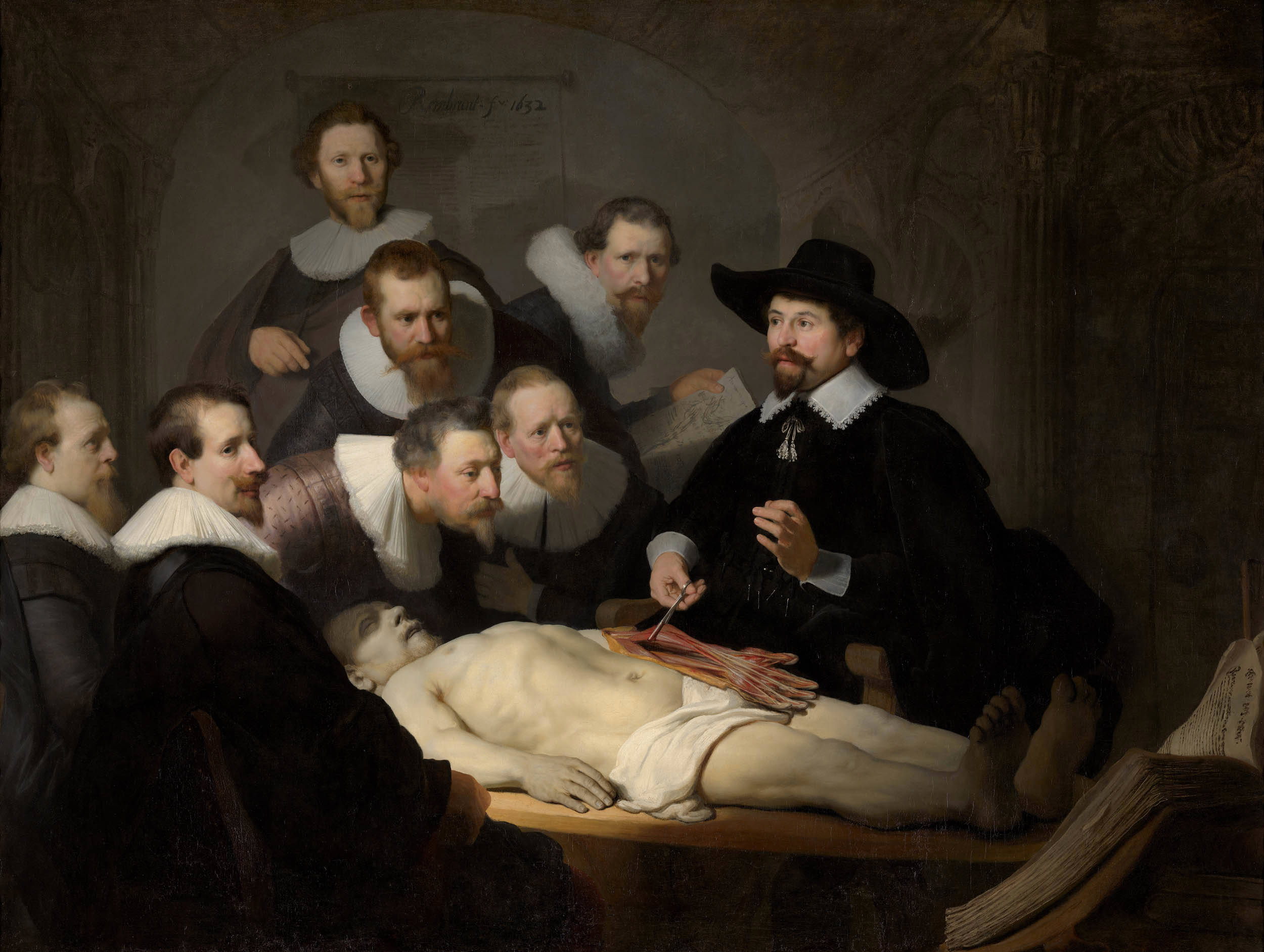
The most unusual painting I saw during my visit to the Mauritshuis museum in Amsterdam this summer was “The Anatomy Lesson of Dr. Nicolaes Tulp.” It’s a Rembrandt, but what fascinated me was the unusual subject: a somewhat gruesome dissection. And what’s stuck with me, now weeks later, is a story the museum staff told about the painting — a story I think any artist or writer would appreciate.
You’ll notice, the staff member said, that the dead man’s right hand is a slightly different color than his body. This is because originally, the corpse had no right hand. Back then, autopsies were done on criminals. This man stole something, lost his hand and then was executed.
The problem, the employee said, was people looking at the painting didn’t pay attention to anything but that chopped-off hand. Rembrandt and his patron wanted their attention on the lesson, so he painted over the corpse’s stump with a new hand.
My takeaway: even an artist as talented as Rembrandt couldn’t perfectly predict or control what his audience found most interesting (or lurid) about a painting. But he could adapt and alter the work to fulfill his vision — a good thing to keep in mind while revising.